⚕️💊 High-risk Early Breast Cancer Patients in Quebec Left Behind by Recent INESSS Recommendation
Tuesday, 09 December 2025 10:11.AM
- Quebec has the highest rate of breast cancer in Canada. The Government of Quebec recently endorsed lowering the breast cancer screening age for women, reflecting the province's commitment to earlier diagnosis and improving outcomes.
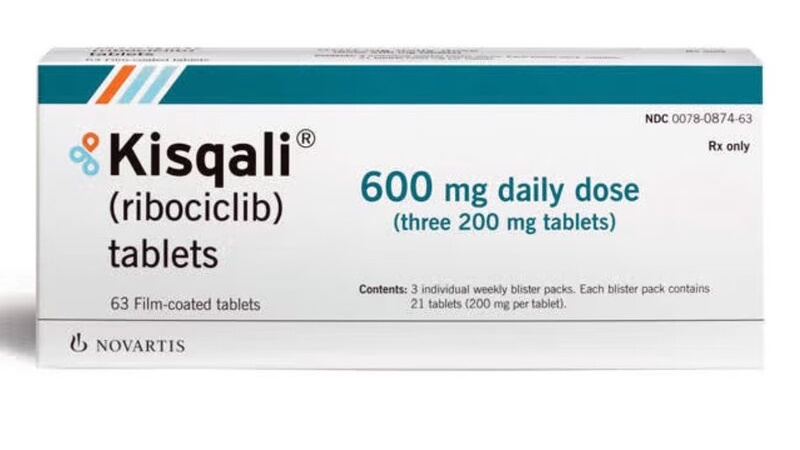
- Despite this commitment to improving breast cancer outcomes, and the comprehensive clinical evidence, INESSS has recommended limiting the patient population eligible for access to KISQALI® (ribociclib tablets), a treatment that can significantly reduce the risk of breast cancer recurrence.
- Approximately 90-95% of people diagnosed with advanced breast cancer have previously been diagnosed and treated for early breast cancer. Of these recurrences, 80% have spread and are incurable.
- KISQALI is the only CDK4/6 inhibitor approved for early breast cancer patients with high-risk disease characteristics whose breast cancer has not yet spread to their lymph nodes. -
Novartis Canada is deeply disappointed by the recent Institut national d'excellence en santé et en services sociaux (INESSS) recommendation to limit the patient population with early breast cancer (eBC) that is eligible for access to KISQALI® (ribociclib tablets). Without coverage by the public drug plan, patients who are screened and diagnosed with eBC and face a high risk of progression to advanced disease will not have access to a treatment that can significantly reduce the risk of breast cancer recurrence.
Approved by Health Canada in June 2025 for adult patients with hormone receptor positive (HR+), human epidermal growth factor receptor 2 negative (HER2-) stage II-III eBC at high risk of recurrence, KISQALI is a treatment that is taken after a primary cancer treatment to lower the risk of cancer returning. In clinical trials, KISQALI demonstrated a significant 28% reduction in the risk of recurrence across a broad population of high-risk eBC patients, including a significant 40% reduction for patients whose cancer has not yet spread to lymph nodes but who have other high-risk characteristics.
INESSS has recommended KISQALI be reimbursed only for the limited patient population that already have access to another CDK4/6i treatment option. Of critical importance, the approach used to arrive at this recommendation is inconsistent with established standards in health technology assessment and ignores the clinical trial design evaluating KISQALI in eBC that supported regulatory approval in over 55 countries.
This decision creates a significant treatment gap, causing eligible patients to be left behind with no additional, publicly funded treatment option to reduce the risk of recurrence. As of September 2025, KISQALI in eBC is reimbursed in over 20 countries – including in the United Kingdom and Germany where KISQALI is reimbursed for all eligible patients at high risk of recurrence. Public reimbursement of KISQALI in Quebec must include all eligible eBC patients, aligned with Health Canada approval, to ensure equitable access to a treatment that can significantly reduce their risk of breast cancer recurrence and improve long-term outcomes for patients in Quebec.
Health Canada's approval of KISQALI offered hope to a patient community in need of more effective tools to help improve their chances against this challenging disease. Novartis Canada stands firmly with all patients, families, and healthcare providers in the fight against breast cancer. We urge decision makers to align public reimbursement with the robust clinical evidence supporting KISQALI in eBC to ensure access to effective treatment options and enable shared decision-making between patients and their healthcare providers, ensuring that no patient is left behind.
SOURCE: Novartis Pharmaceuticals Canada Inc.
-
Related materials:
- 04-Jun-2026 04:41 PM ⚕️Celebrating 20 Years of Canadian Stroke Best Practice Recommendations
- 02-Jun-2026 12:00 PM ⚕️Your Genes May Explain Why Your ADHD Medication Isn't Working. Now There's a Test for That.
- 22-Apr-2026 02:14 PM 🍁💵Ontario Introducing Legislation to Protect and Strengthen Ontario’s Agri-Food Sector 🥔🥕
- 22-Mar-2026 10:23 AM 🍟👋⚖️ Food Businesses Face Penalties for Mislabelling Products as Canadian
- 14-Mar-2026 02:21 PM ⚕️New Regional Breakdown of Growing Health System Demands Underscores Need to Prevent, Detect and Better-Treat Chronic Illness
- 12-Mar-2026 12:00 PM ⚕️Improving Equitable Access to Sexual and Reproductive Health Services Across the Country
- 06-Mar-2026 04:33 PM ⚕️⚖️ Canada-wide Talcum Powder Class Action Certified Against Johnson & Johnson
- 05-Mar-2026 02:53 PM ⚕️👨🔬🔬 The World's Largest Brain Research Prize Awarded for Groundbreaking Discoveries on How We Sense Touch and Pain
- 06-Feb-2026 05:08 PM 🚗 General Motors is Canada's Electric Vehicles Sales Leader in 2025
- 06-Feb-2026 02:00 PM Upcoming Event: 🥘😋 NIssan Brings Ingenuity to Game Day Snacking with New Rogue Spot Starring Canadian Chef Matty Matheson